ABOUT
A Haredi feminist movement
for social change.
Nivcharot (NGO) began as a protest movement called "No Voice, No Vote" and has worked since 2012 for the representation of Haredi women in decision-making, for rights awareness in the Haredi community, against tyranny, and for the training of Haredi women's leadership. We believe the absence of Haredi women's voices from Israeli politics and public life is an injustice the whole society pays for, and that we have the power to change it from within.
Our purpose
An alternative Haredi leadership,
of women and men alike
Nivcharot does not ask to replace Haredi leadership but to widen it: a leadership women take part in, equally and respectfully. Three lines of work follow from that purpose, and the means follow from each line.
Raising awareness
Turning representation from a taboo into a conversation, inside the community and beyond it.
- The podcast Haredit Meduberet
- Writing in the Haredi and general press
- Conferences and discussion circles
Training leadership
Building a corps of Haredi activists who lead in their own right and carry the ideas onward.
- HaNivcheret: nine cohorts since 2018, about 20 activists in each
- The alumnae network, active on the ground, in local government and in the media
- Partnerships with women’s organisations, academia and civil society to widen Haredi feminist discourse
Law, policy and halakha
Using the state’s levers against the exclusion of women, and clarifying what halakha itself says.
- Petitions against exclusionary party bylaws
- Position papers and lobbying in the Knesset and its committees
- Clarifying the halakhic position on women holding public office
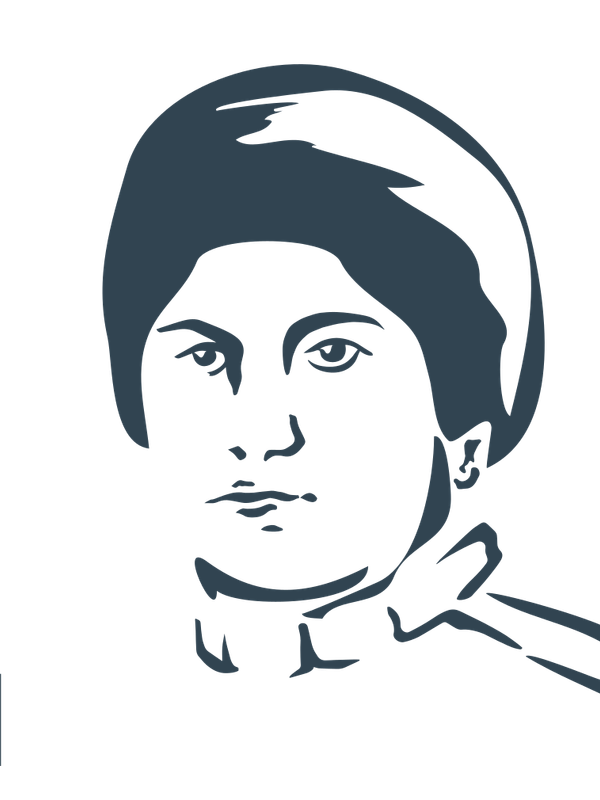
THE WOMAN IN THE LOGO
Sarah Schenirer
An educator, a Yiddish author and a playwright. Born in Krakow in 1883 to a Hasidic family, schooled in Polish, and as a young woman obliged to earn her living as a dressmaker. In 1917 she opened a class for girls in her home, and out of it grew Beit Yaakov, the first girls' education network in the Haredi world.
Education was only part of what she did. She wrote Yiddish plays for her students and reading material for the system she built, founded the Bnot Agudat Yisrael organisation, and spoke at Agudat Yisrael conventions, at a time when a woman on a Haredi public platform was an anomaly. Her writings were collected after her death in 1935 into a single volume, Em BeYisrael.
She herself rejected any feminist label, and claimed what was due to her “according to the rights the Torah granted us”. That is exactly why we chose her for the Nivcharot logo: one woman, an outsider, who built an institution the whole of Haredi society still lives in. Haredi women's leadership is not a new invention. It was here first.
→ How it began, the timelineBy the numbers
The figures behind the struggle, from the position papers we submitted and from the petitions. Each figure carries its source and the body it was submitted to; details not yet verified are marked with a dotted underline.
Haredi women who have served in the Knesset since 1948
Nivcharot position paper, 2017 · submitted to the Supreme Court, the Knesset and government ministries
Haredi members of Knesset, all of them men
Esty Shushan, 2021 · citation to be completed
Pay gap between a Haredi woman and an average Israeli woman
From "The story of the last suffragettes"
Employment rate among Haredi women
Nivcharot position paper, 2017 · submitted to the Supreme Court, the Knesset and government ministries
Haredi women's share of Israeli society
Hadar Leiner, Knesset committee 2023
Of 114 women's shelters are designated for Haredi families
Nivcharot position paper, 2020 · recipient to be completed
Women who asked to join the Haredi parties and were refused
From the Supreme Court petition against Shas, 2022
HaNivcheret cohorts since 2018, about 20 activists in each
HaNivcheret program data, Nivcharot
Ultra-orthodox women in Israel, facts and figures
The picture we set out from, as set out in Nivcharot’s document "The story of the last suffragettes".
No representation in municipal and national politics.
Rise of extreme modesty practices such as segregated buses and sidewalks.
Literature and newspapers with no female visuals or women's pictures.
Allocation of resources for education to ultra-orthodox men only.
Chareidi women earn 30% less than women from other Israeli sectors.
High mortality rate from illness such as breast cancer.
Women, teenage and young girls at higher risk to sexual abuse.
Rising divorce rate and with it more single mothers.
A total disregard of Chareidi delegates, all male, of women's and gender issues in decision making centers.
Early marriage, young motherhood, sole supporter in many professional areas, mother of a large family, alongside unending extremism, discrimination and deprivation of rights.